

Building This Template: A Ghost's Tour
Seven decisions that hold the Astro Performance Starter together — zero-JS by default, semantic tokens, contract tests, halt-on-violation gates.
4 min read
Astro 7 + Tailwind 4 · zero-JS baseline
A performance-first Astro 7 starter your agent builds under enforced discipline — zero-JS baseline, halt-on-violation gates, accessible by contract.
Lighthouse for runtime performance · Stryker for test-quality verification (ADR-042)
Scores reflect ideal conditions (empty starter). Real-world results may vary by deployment and content.
Six production-tested capabilities — from zero-JS performance to AI-ready documentation — ready to customise from day one.
Zero-JS baseline with islands architecture. Ships with 95+ Lighthouse and CI/CD performance budgets.
Layered AI constitution, role-separated workflow, and halt-on-violation CI gates. Your agent works under the same rules you do.
Semantic design tokens with automatic dark mode, WCAG AA compliance, and automated contrast validation.
Biome replaces ESLint + Prettier with 20x speed. Tailwind v4 CSS-native config. TypeScript strict mode and automated quality gates.
Battle-tested atomic design system with accessible primitives, responsive layouts, and TypeScript interfaces.
Portfolio-ready pages included: About, Projects, Blog, Contact. Launch with professional content, not empty shells.
Foundation is done. Build has demo content ready to replace. Polish guides you to production.
Architecture, tooling, and design system — pre-configured and working. You never touch this unless you're making architectural changes.
Clone the repo and this is already running.
Components, page templates, blog posts, and case studies — all built with real content. Replace the demo content with your own brand and copy.
Your agent works under the same constitution — every component has a contract test.
Performance budgets, deployment configuration, and monitoring. Follow the implementation guides when you're ready to go live.
Each phase has a clear scope — go as far as your project needs.
Carefully selected tools for optimal developer experience
v7
Rust compiler, Vite 8, Fonts API, Content Layer, View Transitions
Zero-JS by default, islands on demand, agent-aware dev server (ADR-063)
v5
Type-safe JavaScript with strict mode
Catch errors early, better DX
v4
CSS-native config — no tailwind.config.js
@theme in CSS, Lightning CSS compiler, zero JS config overhead
v2
All-in-one toolchain for web projects
20x faster than ESLint + Prettier combined
v10
Lightweight React alternative
3KB runtime, familiar React-like syntax
v1
End-to-end testing
Reliable cross-browser testing automation
v4
Fast unit testing powered by Vite
Lightning-fast test execution and hot reload
experimental_
Microtests for every .astro atom and molecule
Sub-second component-contract verification (ADR-040)
v10
Mutation testing monthly via GitHub Actions
Verifies tests actually fail when code breaks (ADR-042)
v0.35.x
High-performance image processing
Automatic conversion, responsive images
Every tool chosen prioritizes speed and efficiency, from Astro's zero-JS baseline to Biome's 20x faster linting.
Modern tooling with TypeScript strict mode, hot reload, and comprehensive testing ensures productive development.
Battle-tested tools used by major companies, with strong community support and active maintenance.
Latest versions of stable technologies that will continue to evolve with web standards.
One clone. Astro 7, Tailwind v4, and a layered AI constitution with halt-on-violation gates — ready to go.
Latest thoughts on Astro, performance, and modern web development.
Seven decisions that hold the Astro Performance Starter together — zero-JS by default, semantic tokens, contract tests, halt-on-violation gates.
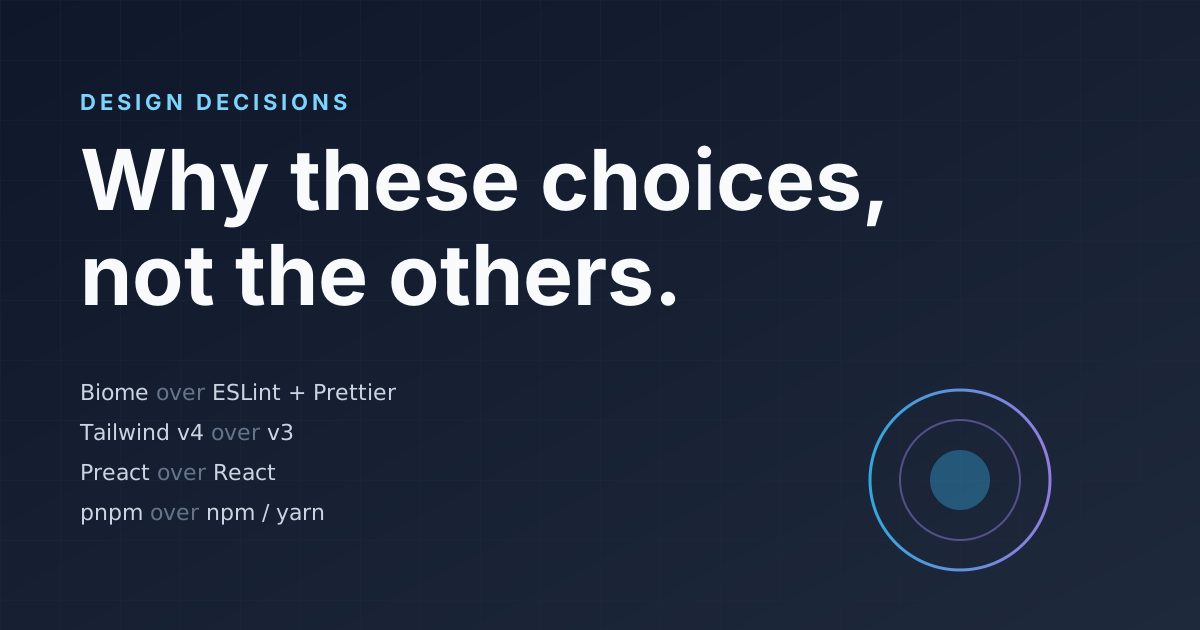
Why Biome over ESLint, Tailwind v4 over v3, Preact over React, and other opinionated choices that shape the Astro Performance Starter.
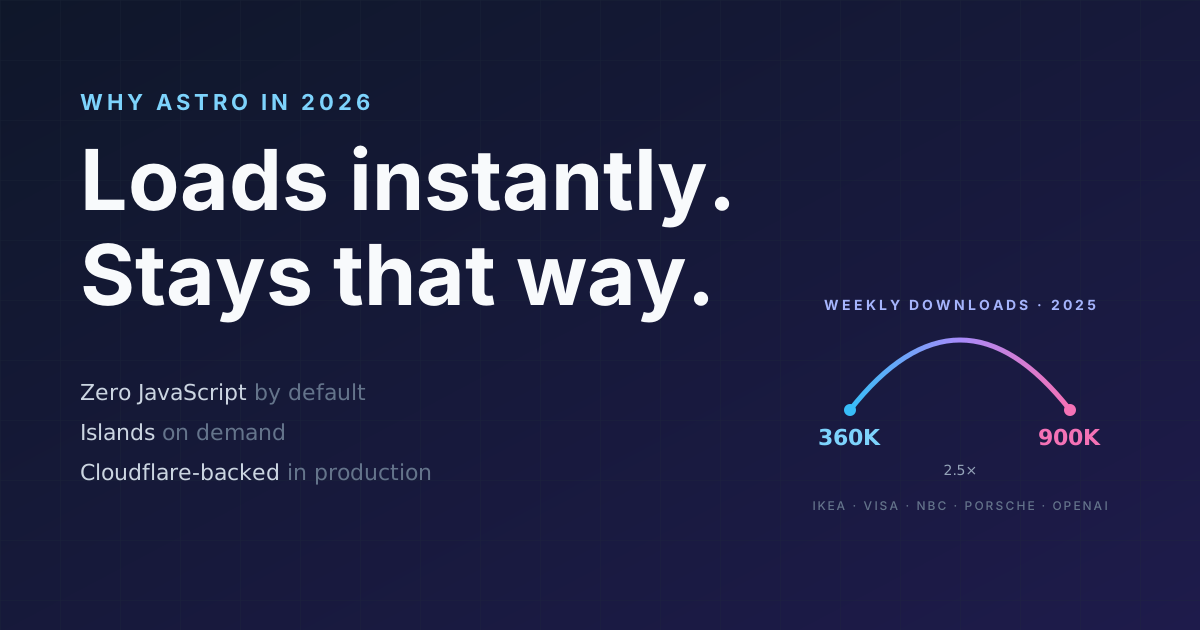
The case for building on Astro has never been stronger — from zero-JS performance to Cloudflare backing, here's why this framework keeps winning.